A Few Words About UsWelcome to FishGoFree

Better Ways to Release Fish:

We are committed to catch and release fishing. This concept is important for even the average angler who is trying to catch enough fish for a few meals at home. Various sources indicate that recreational fishermen keep only a third of the fish they catch and release the rest. This may be due to increasingly strict regulations, catch of undesirable fish species or fish too small to keep, or several other factors. For certain desirable species, the release rate may be greater. At least 90% of landed striped bass are released, and for muskellunge the rate is even higher at 97-98%. Saltwater spotted seatrout are highly sought as great table fare, but even so approximately 78% are put back (likely due to stringent state fishing regulations). Undesirable fish are almost always released, including saltwater catfish and stingrays, freshwater drum and gars, and the like.

Thus, sport fishermen release fish as a routine part of their everyday angling experience. They have ways of doing this that they have developed over the years, but these may not be optimal. The process should be done in the best way possible to reduce damage to the released fish or in some cases to protect the angler from the fish themselves.

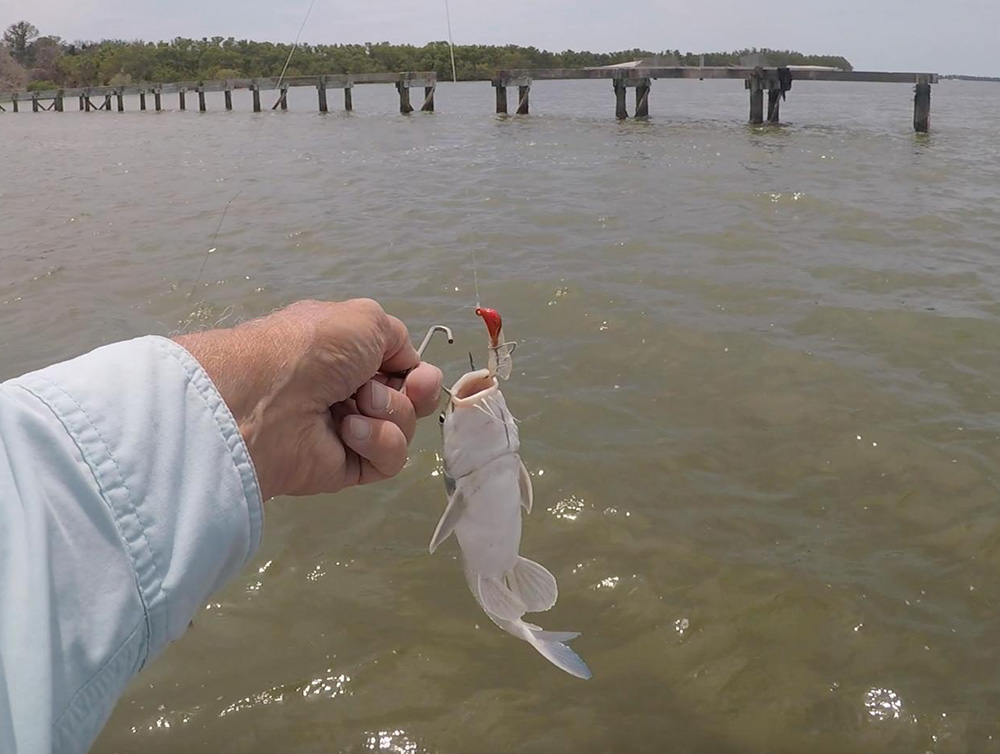
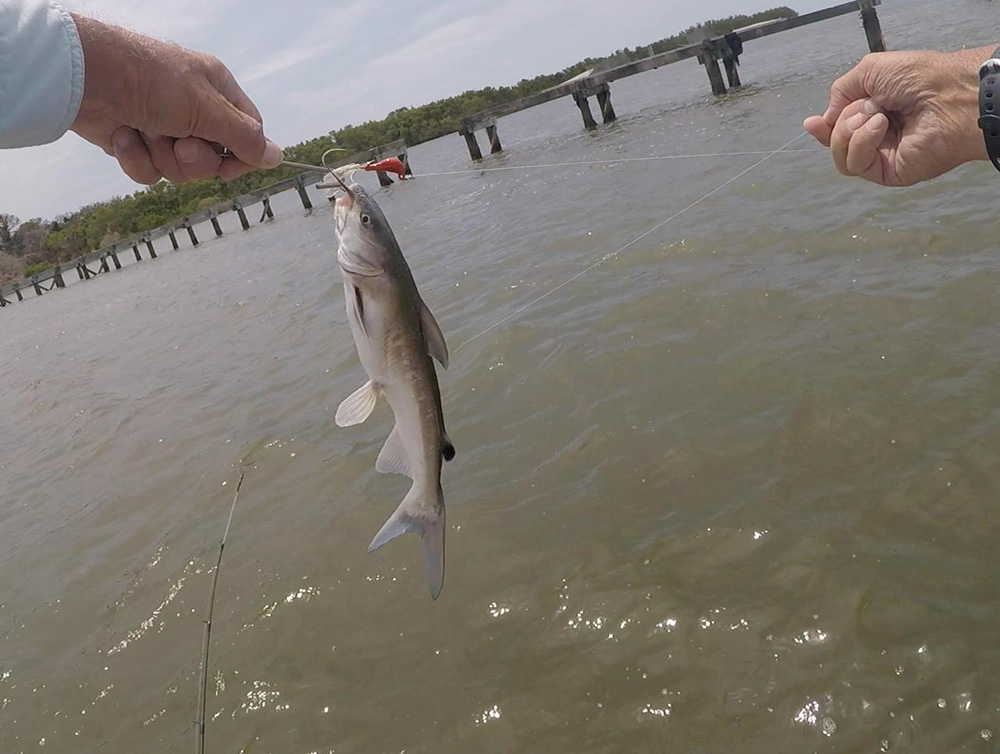
Examples of suboptimal release methods might include netting an undersized muskie, dumping it into the boat, trying to remove the treble hook from fish and net, and then putting the fish back (sometimes needing to revive it in the water). Saltwater catfish represent another example. These fish have sharp spines (coated with pain-inducing toxic mucous) in their pectoral and dorsal fins, and one species (sail catfish) has extremely messy mucous coating their skin. A standard method for releasing saltwater catfish is to hold the fish up by the line, work one’s fingers around the pectoral and dorsal spines, and remove the hook by hand. Not only is there a good chance of suffering a barb injury, but if this technique is used on a sail catfish the angler’s hands will almost certainly become covered with difficult to remove slime. There are better methods.

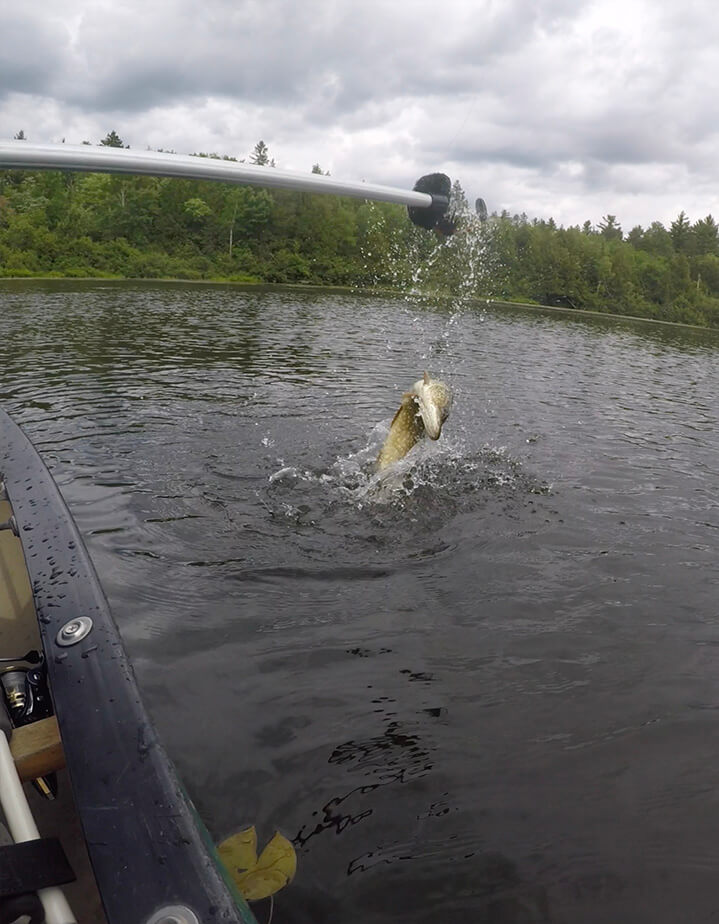
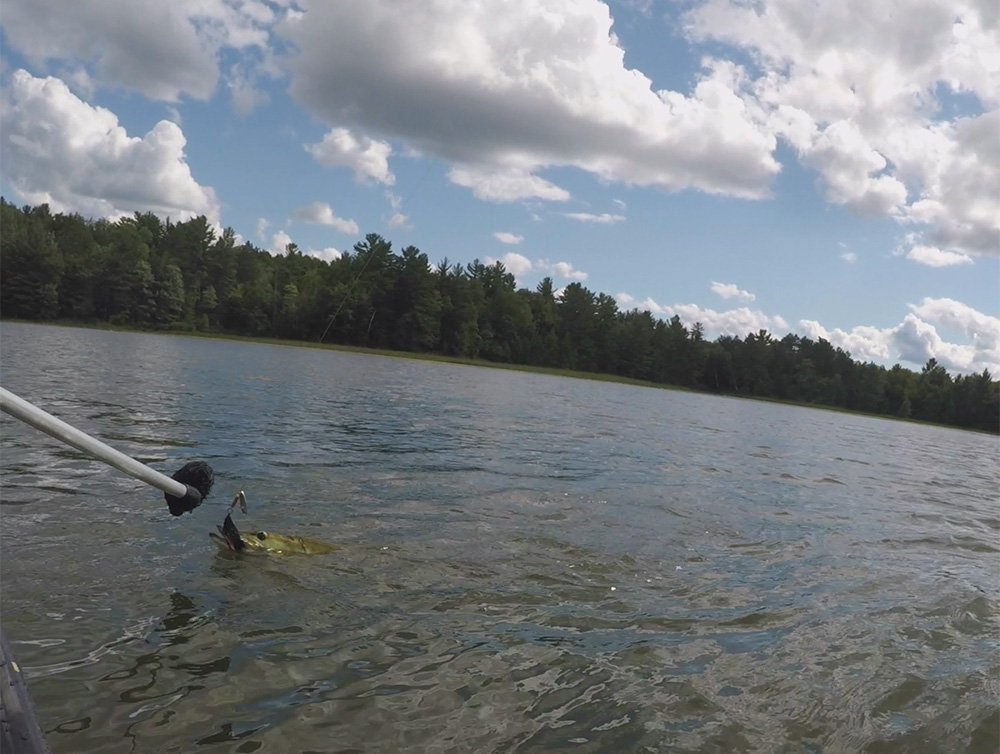
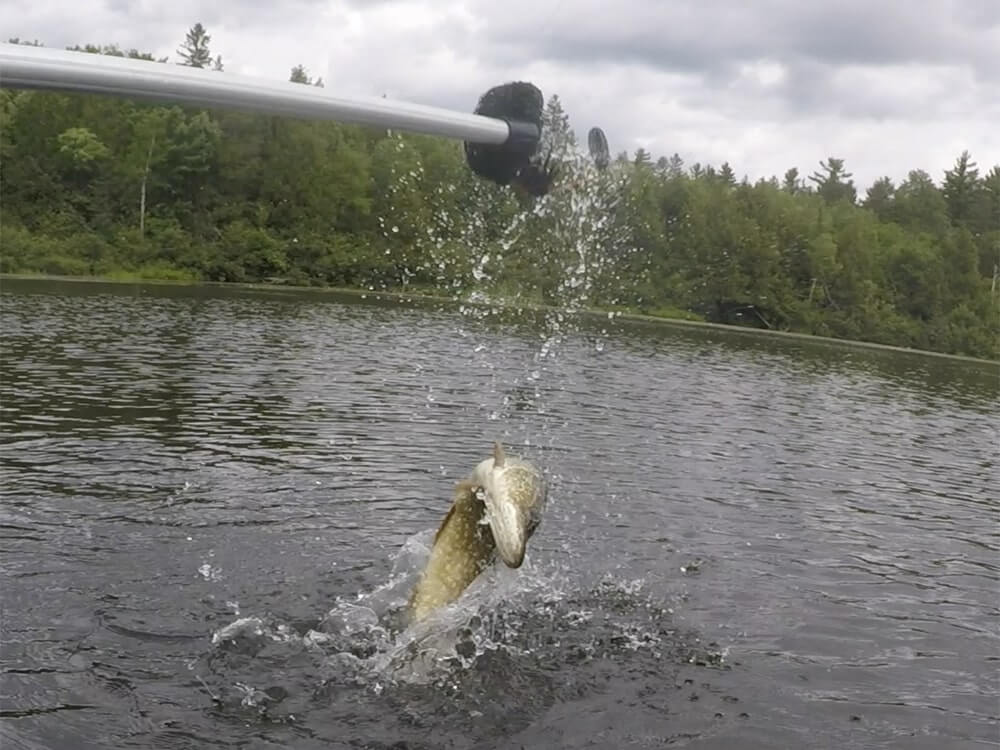
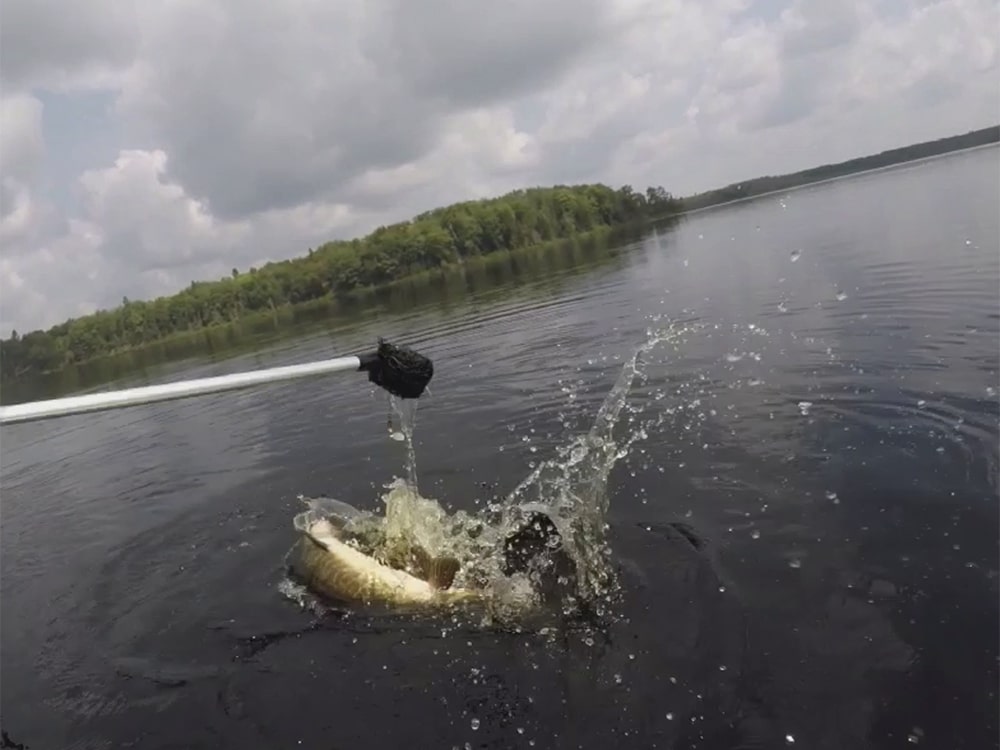
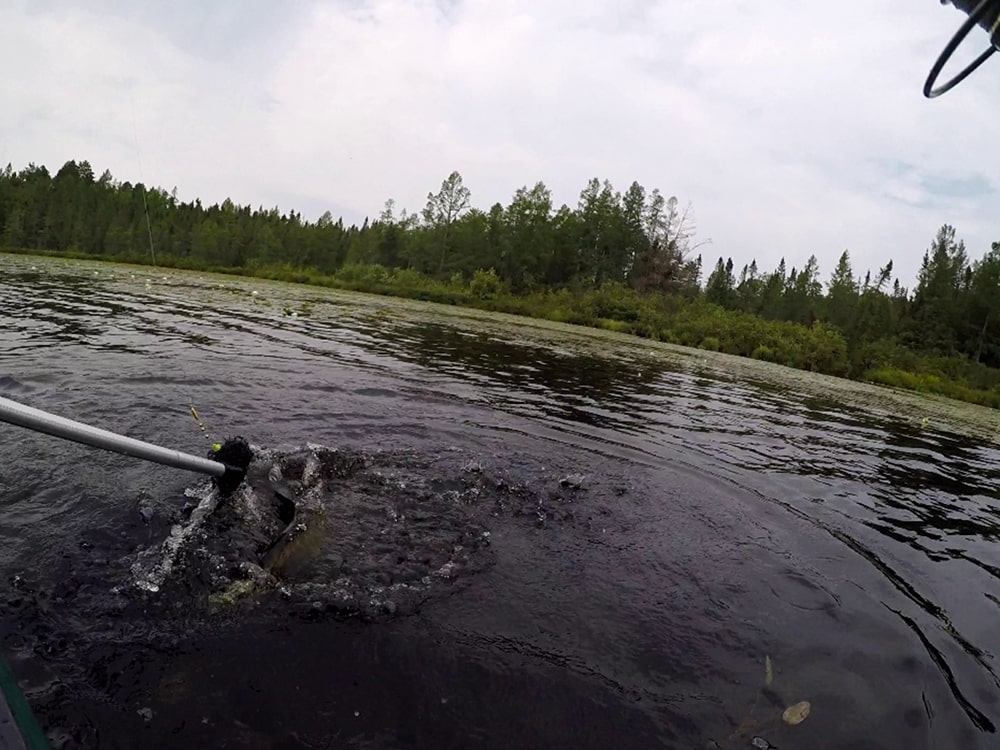
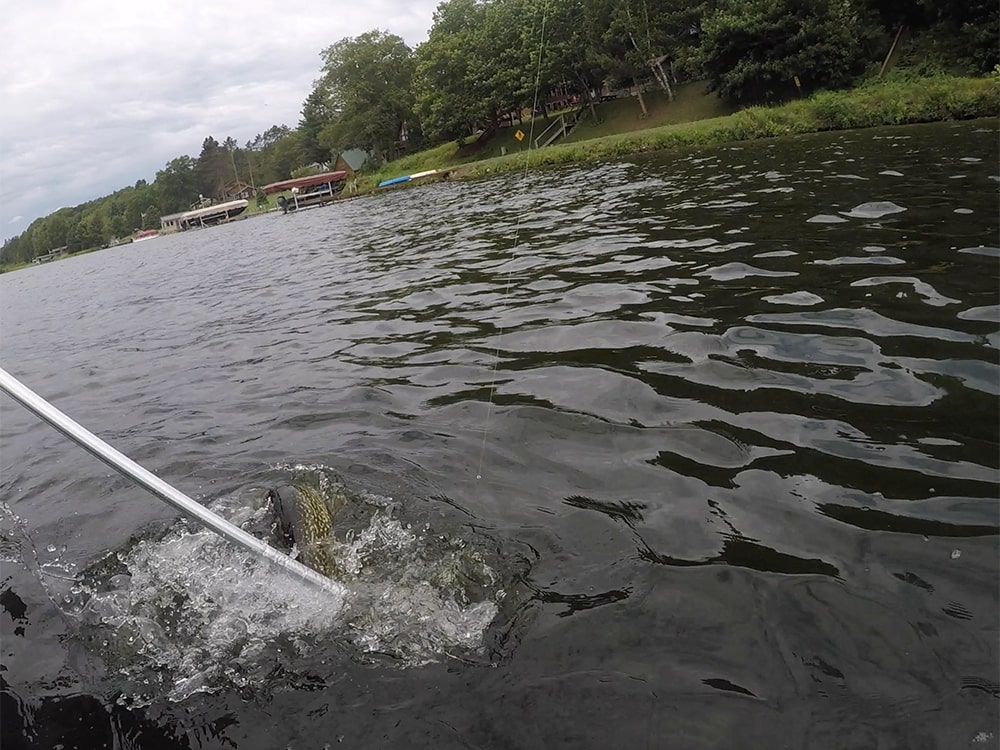
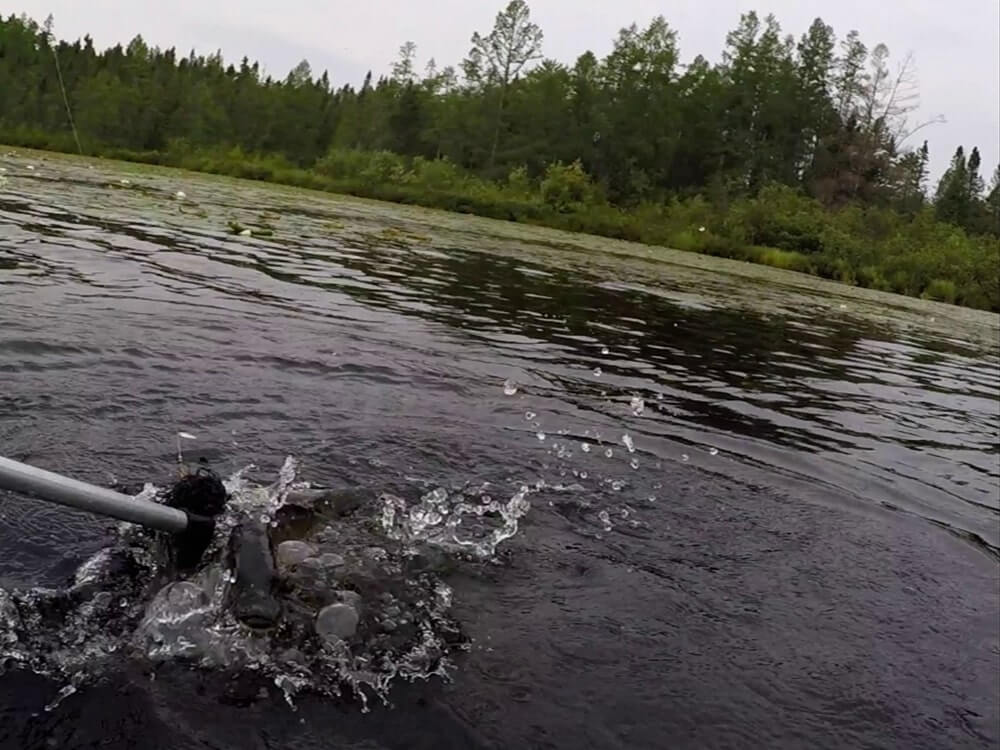
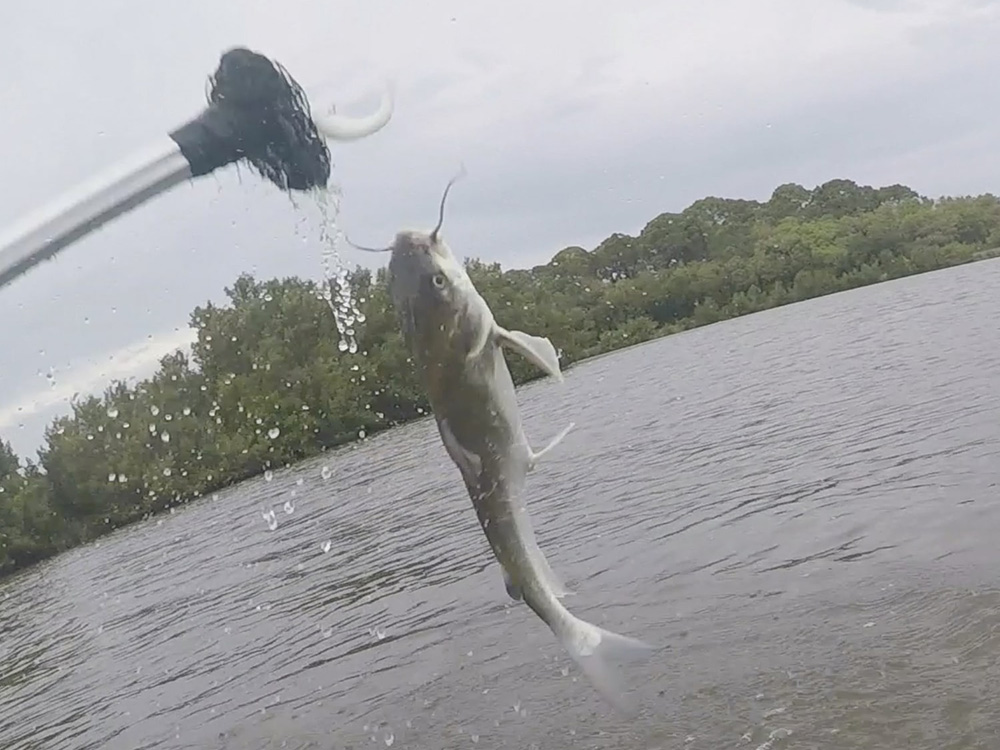
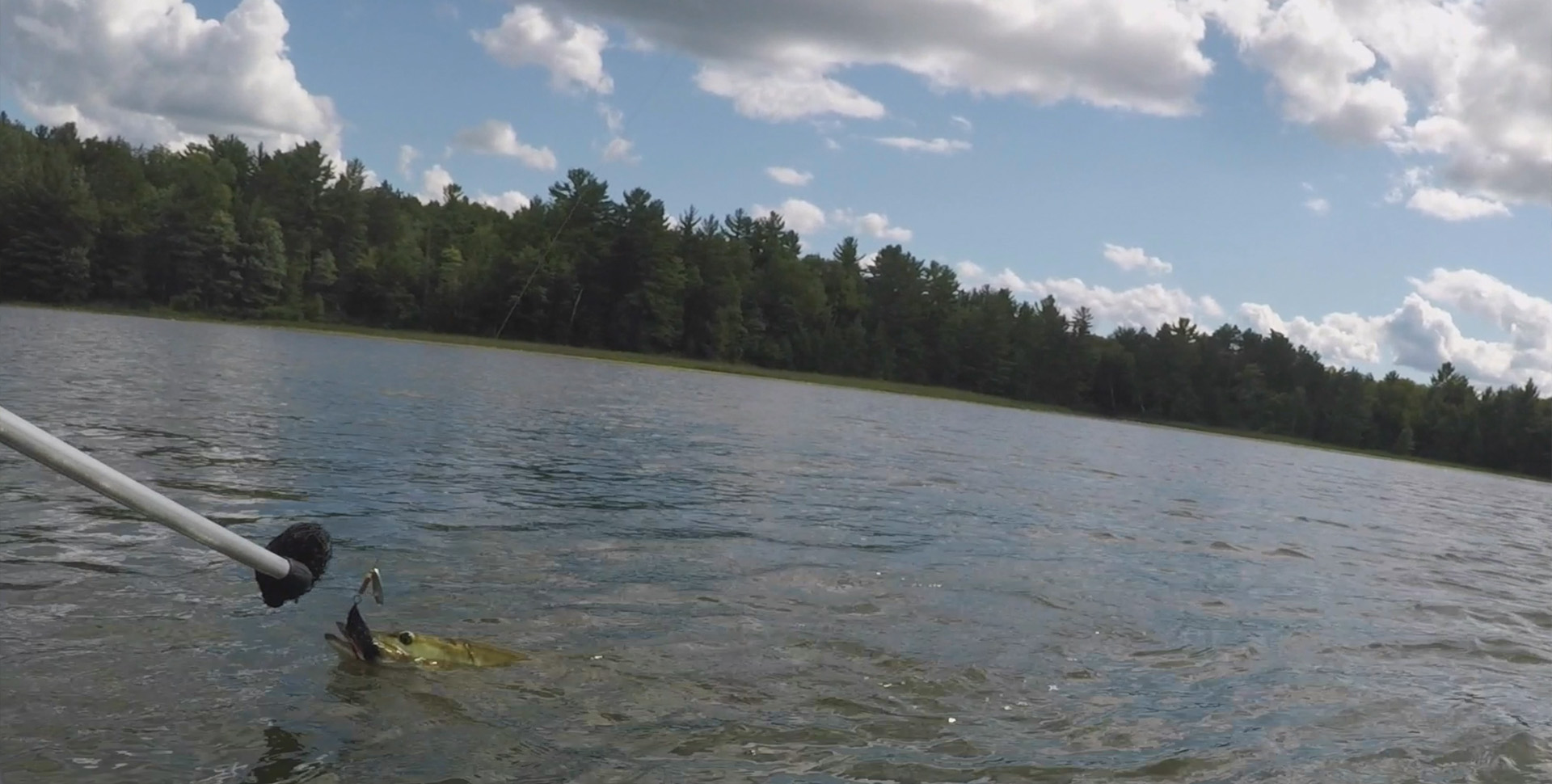
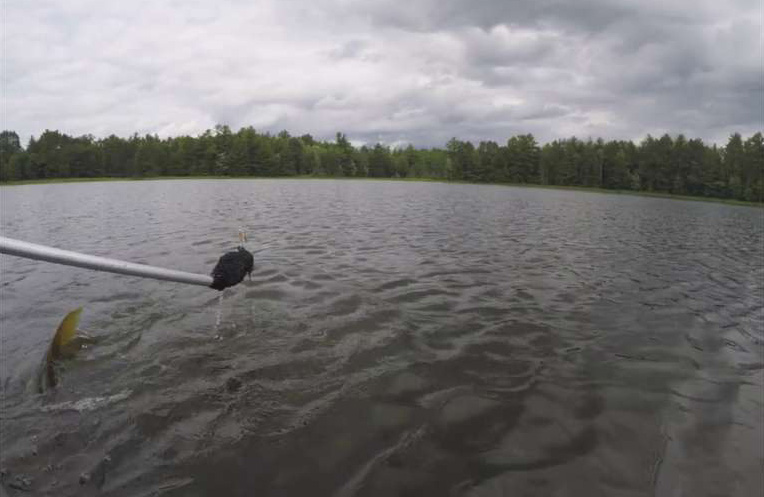
The FishGoFree Catch and Release Stick: The origin of this device is based on the observation that fish (especially muskies) caught on treble hook lures sometimes get free when the hooks become entangled in weeds or the netting of a landing net. In fact, the treble hook cluster is often large enough that it ends up right in the fish’s jaw instead of within its mouth. We have used this concept to develop a new method for releasing fish in the water without having to land them or even touch them in any way (US Patent #11,229,196).

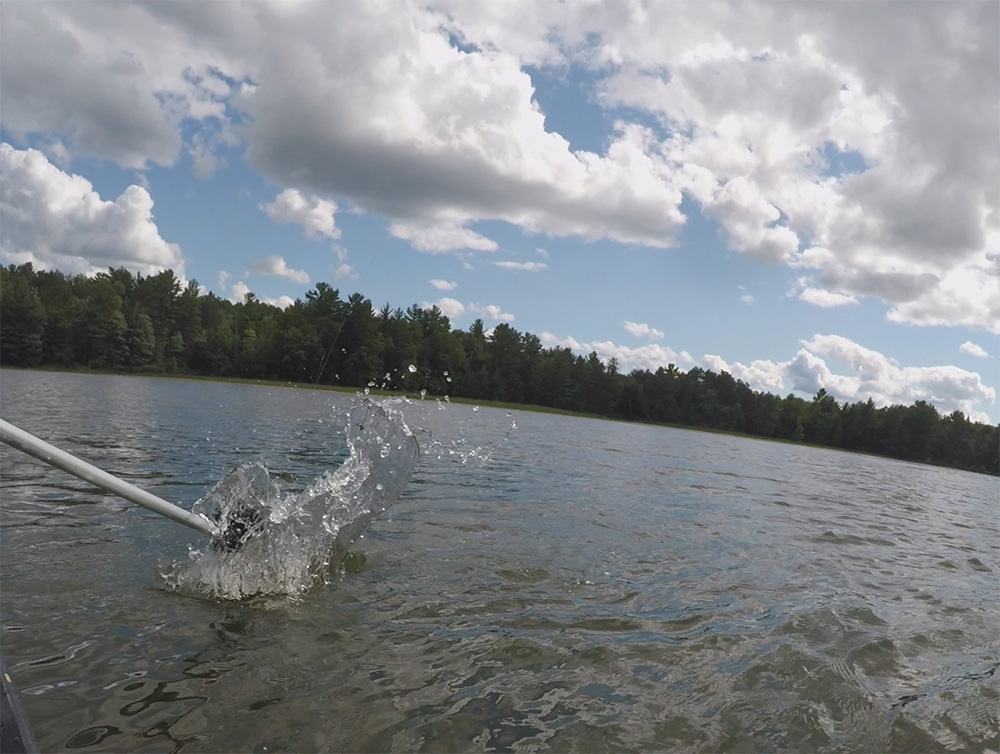
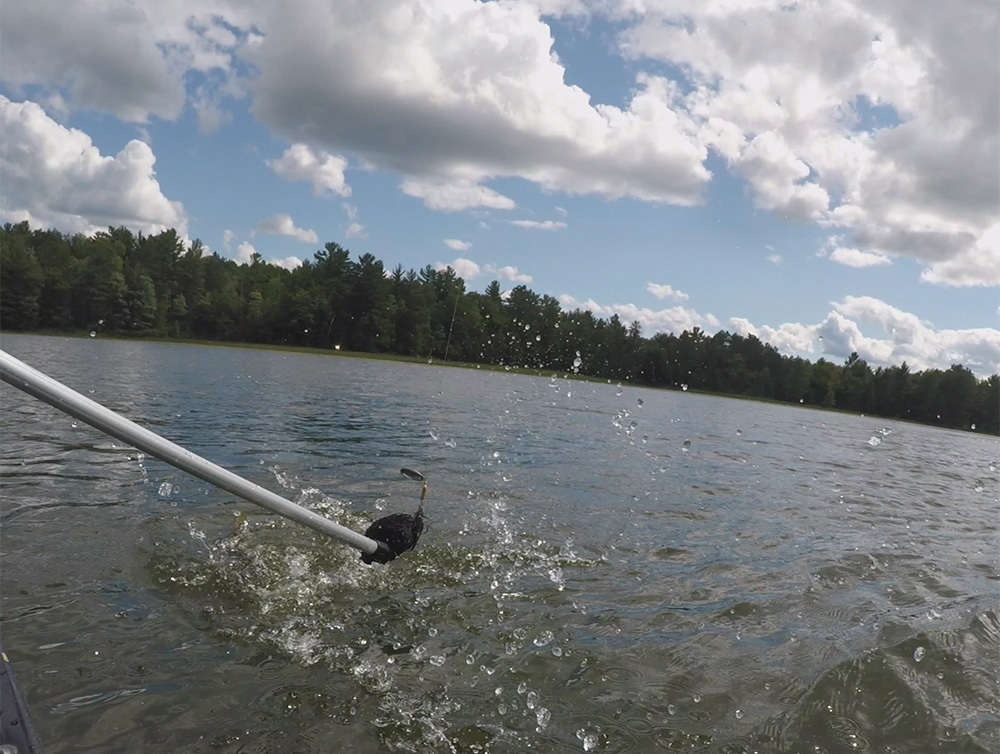
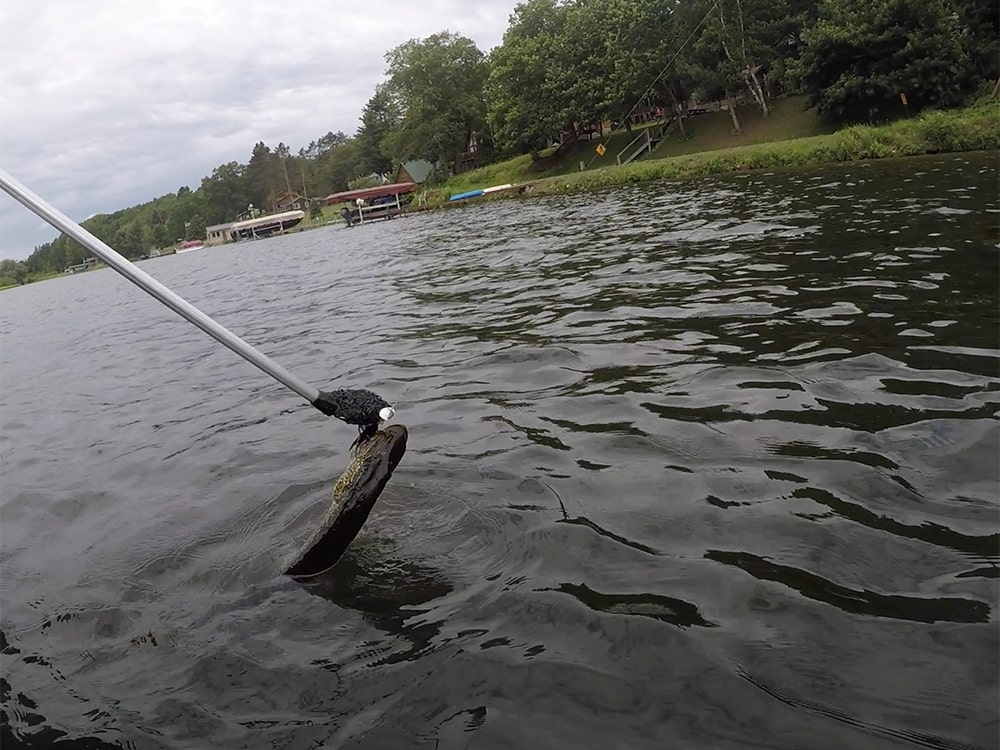
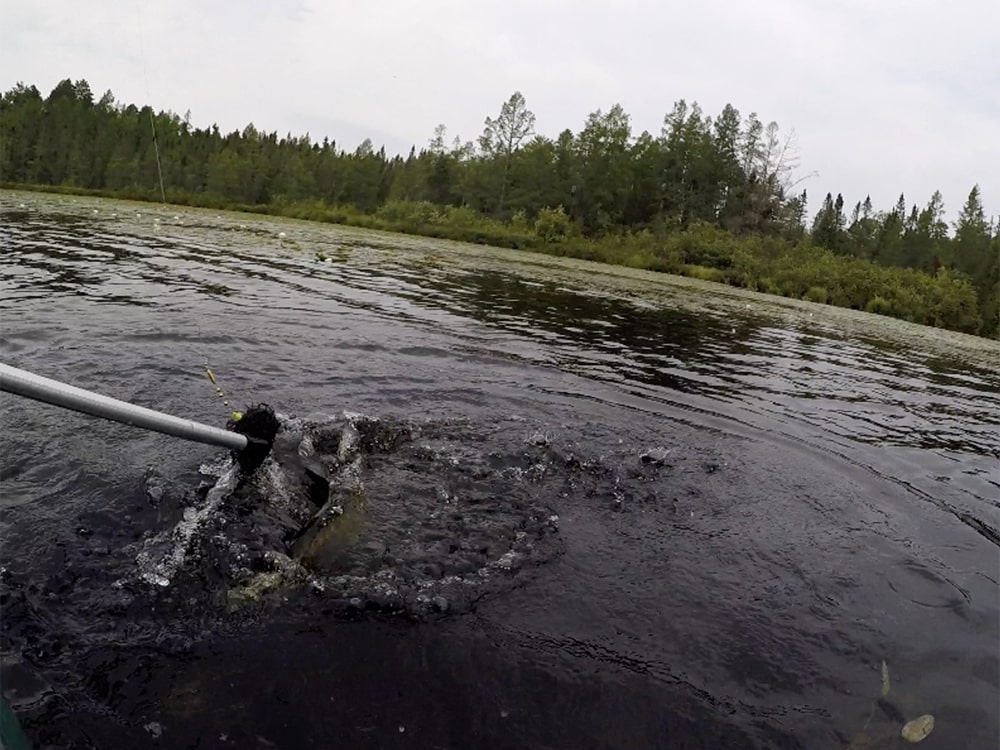
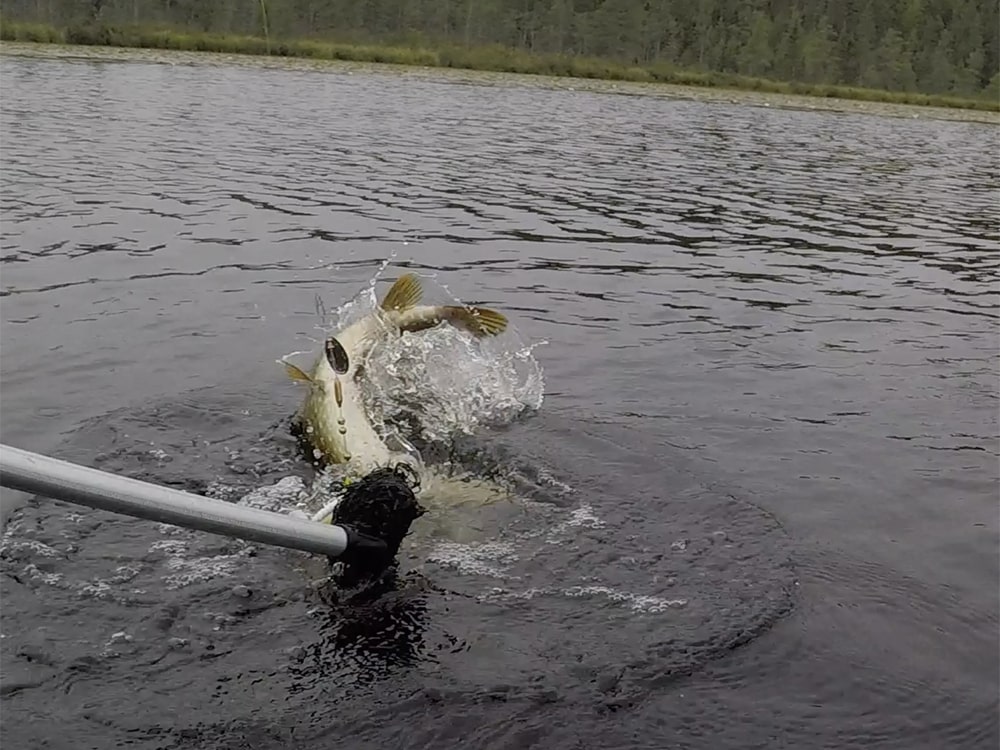
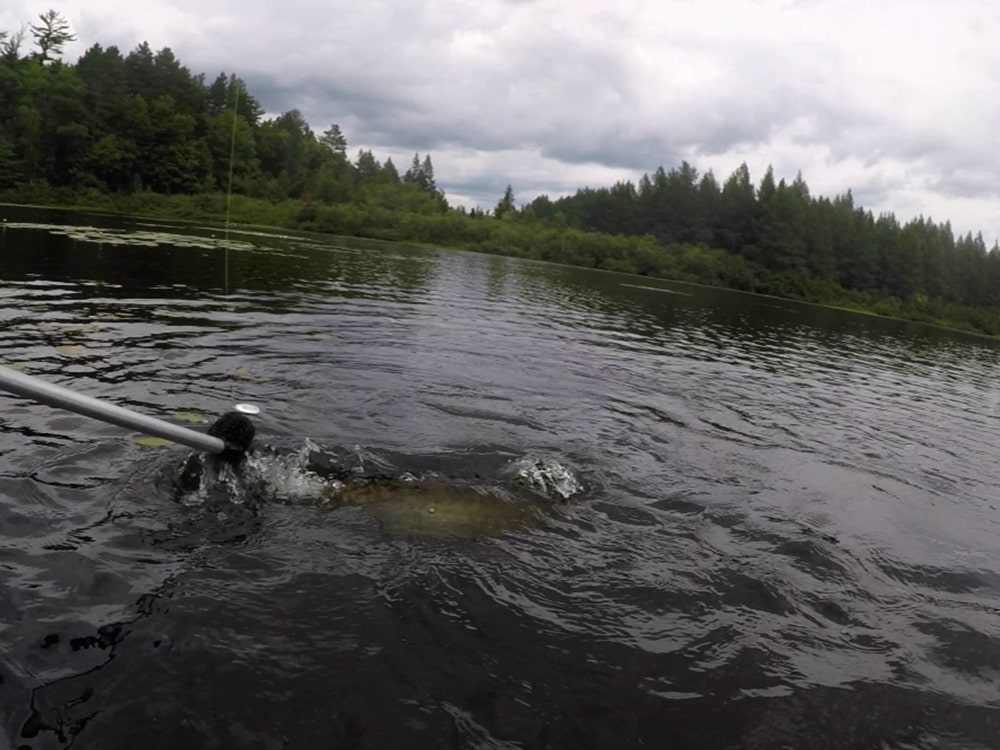
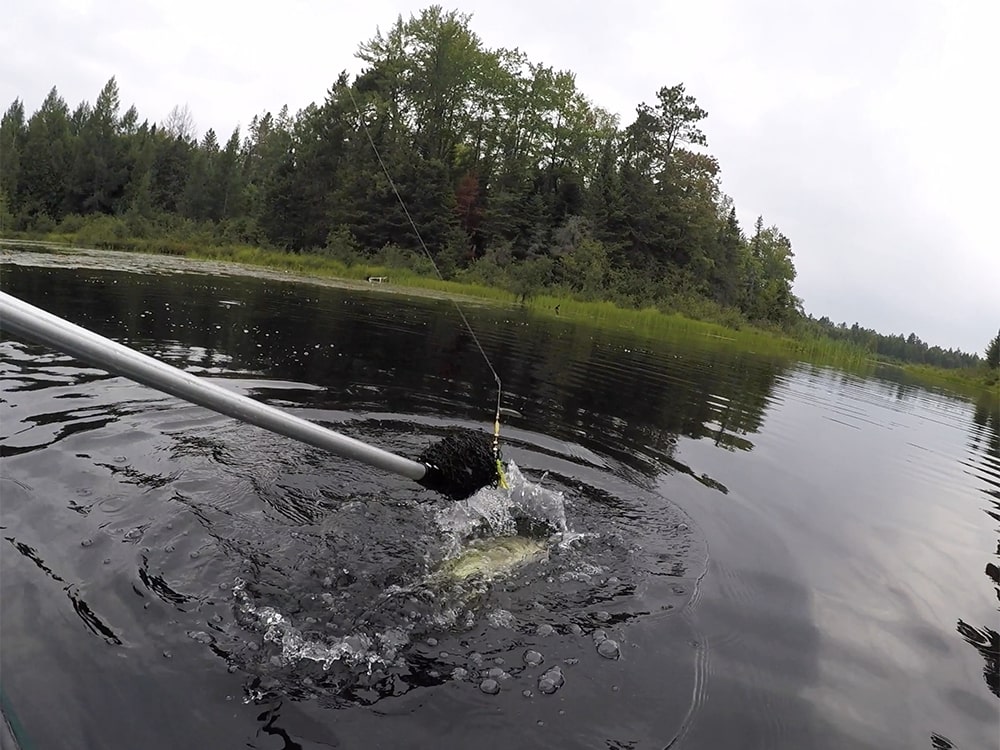
The device consists of a 3-foot aluminum handle with a 3-inch wire frame at the end. The frame is covered with loosely packed netting and angled to about 45 degrees relative to the handle. The technique is useful for fish caught on lures or bait rights with single treble hooks, such as Mepps-style inline spinners (including muskie bucktails), casting or trolling spoons, crankbaits with a single treble hook, quick strike rigs, and the like. A hooked fish to be released is brought alongside and the treble is engaged in the Stick netting. The fish can either shake itself free or be shaken off, with the treble retained in the netting. Of note, the netting is composed of thin and relatively hard strands to resist hook penetration into the strands themselves (which would make hook removal from the netting more difficult).

For fish like undersized muskies that are to be released without landing for photos or measurements, the Stick method is by far the best one – when it can be used. The fish is released with no time out of the water and no handling at all. And this method is also good for less desirable fish caught while fishing for something else. For example, northern pike caught while muskie fishing can be pesky – many fishermen do not want to mess around with pike in the boat, and this method can help.

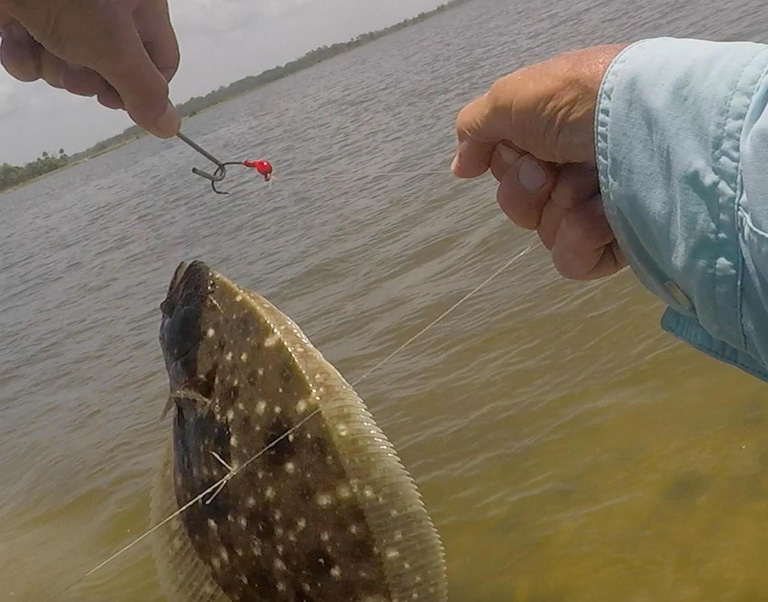
The FishGoFree Hookout: The Hookout is one of a large number of similar hook removal devices that are available commercially. It is based on a well-known principal of using a curved metal hook (or crook) to engage the bend of a hook in the fish to pull it out. However, the Hookout and method for its use have been much improved over competing products. The Hookout is smaller (only 4.63 inches long) and fits well into one’s hand or shirt pocket. It is not cumbersome or difficult to use. There are no sharp edges or protuberances that make it difficult to handle or store. Also, holding this small device in one’s hand provides a strong grip for its use in removing hooks from large fish. The device is made from extremely corrosion-resistant stainless steel and is virtually indestructible.

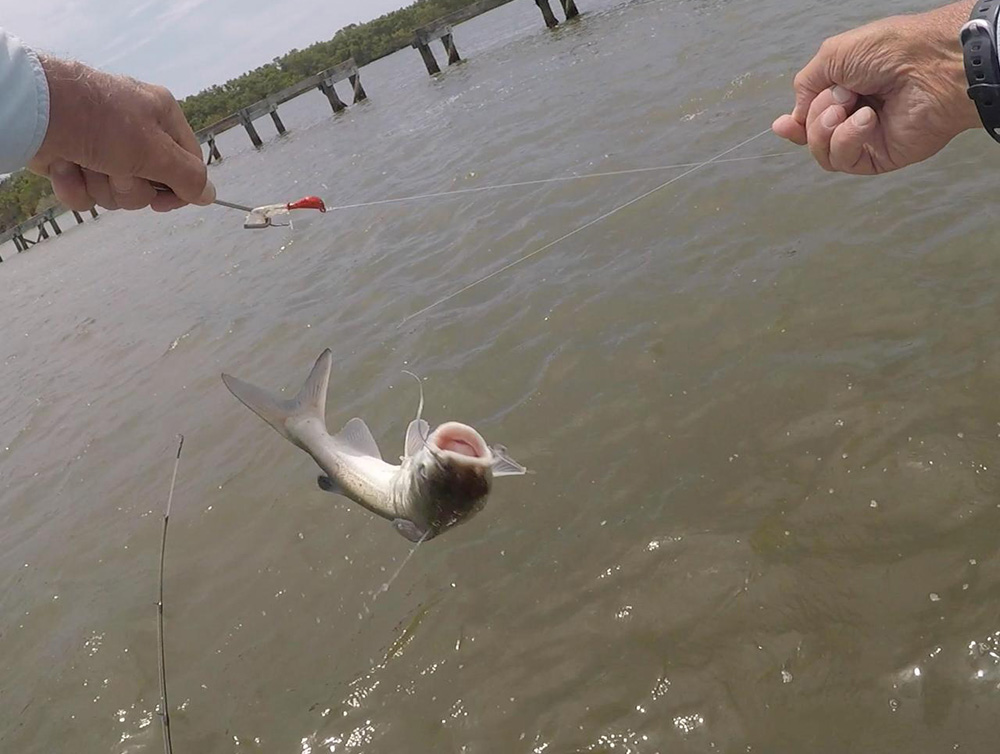
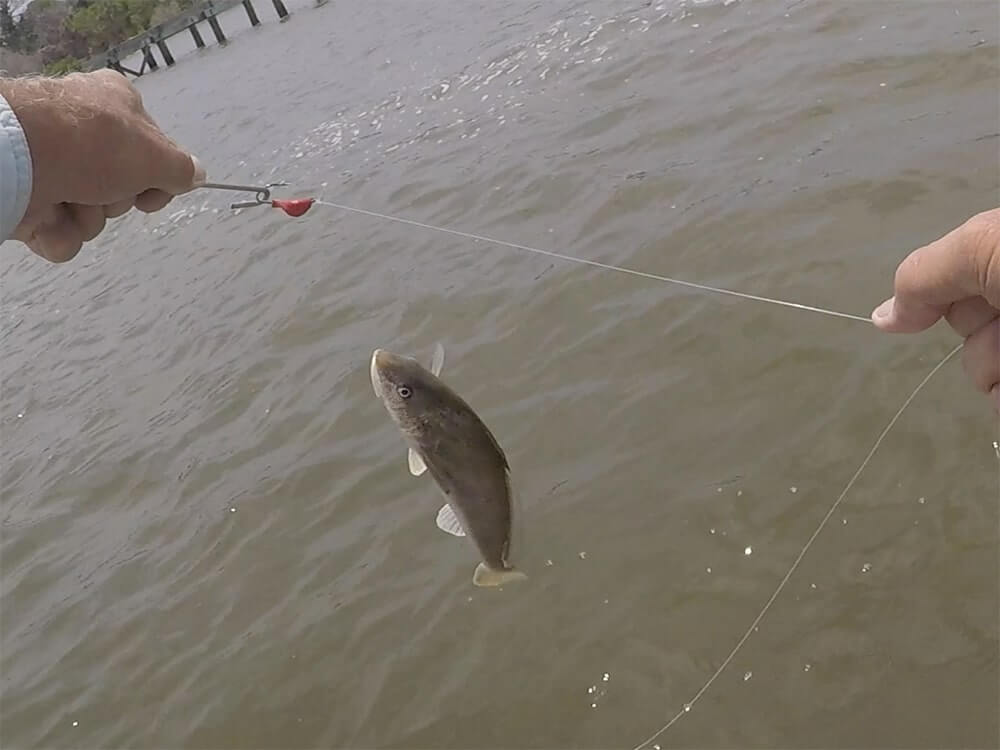
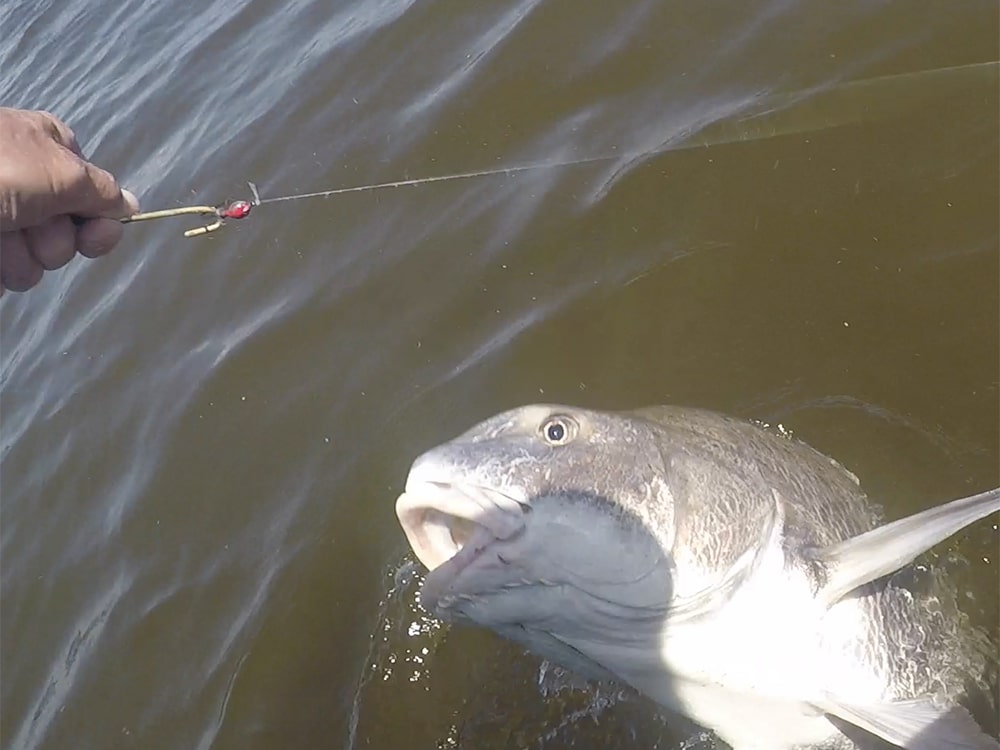
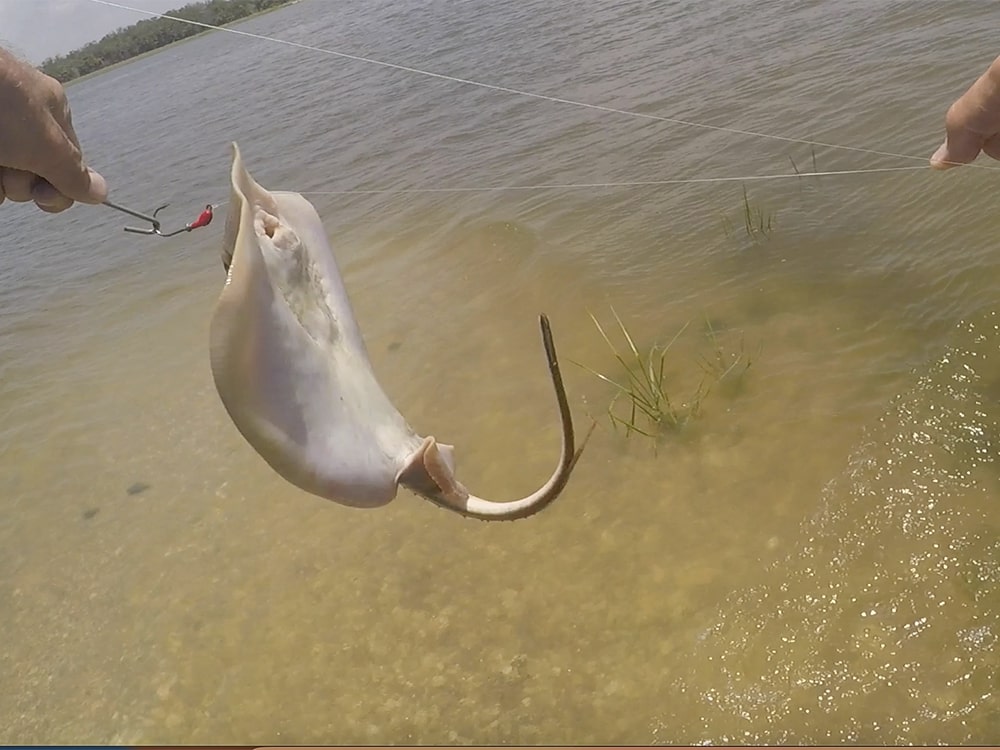
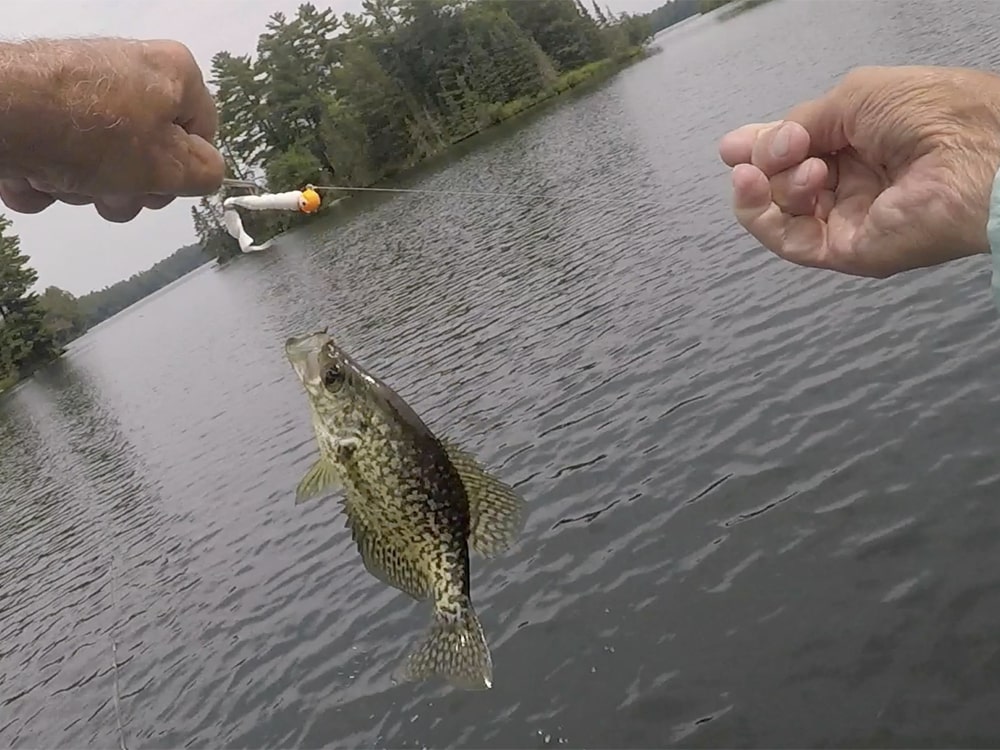
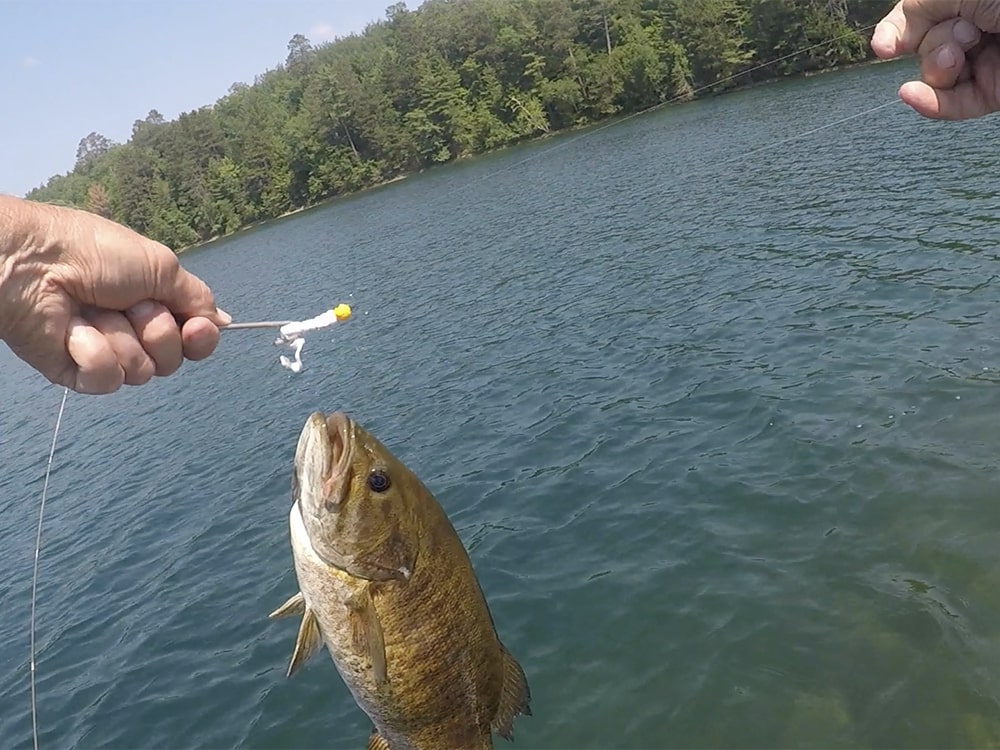
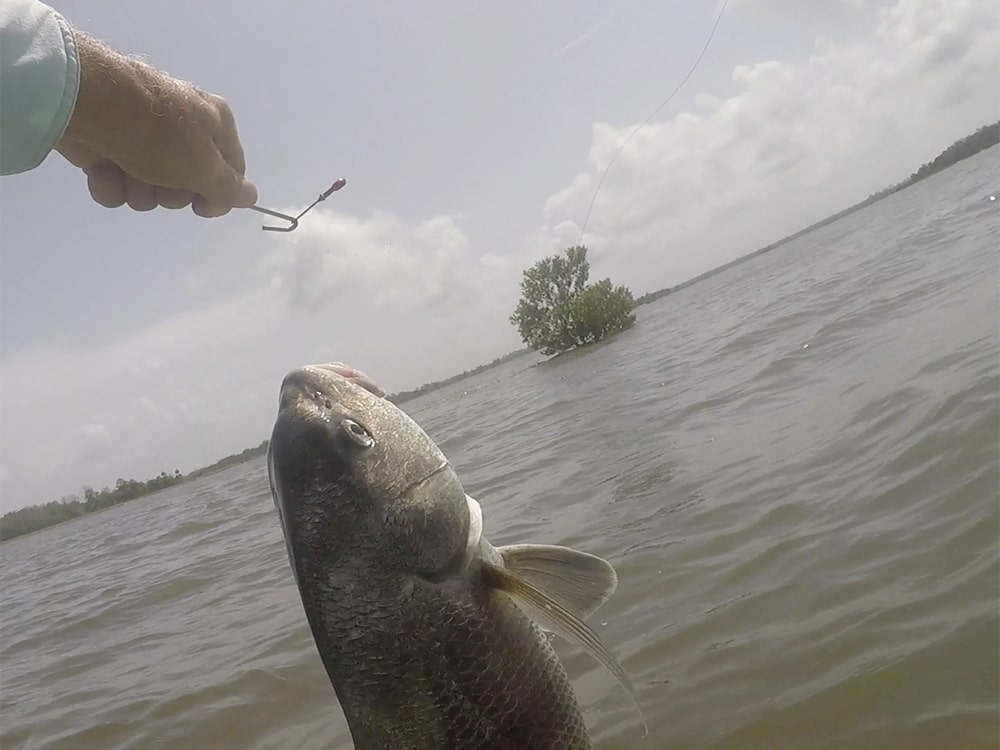
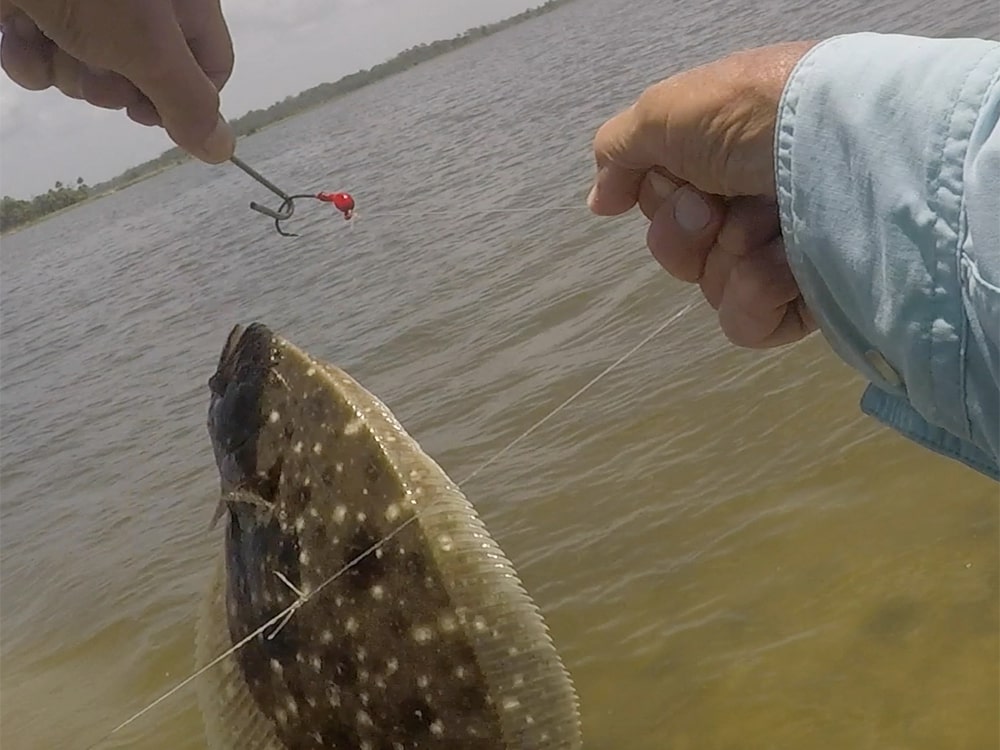
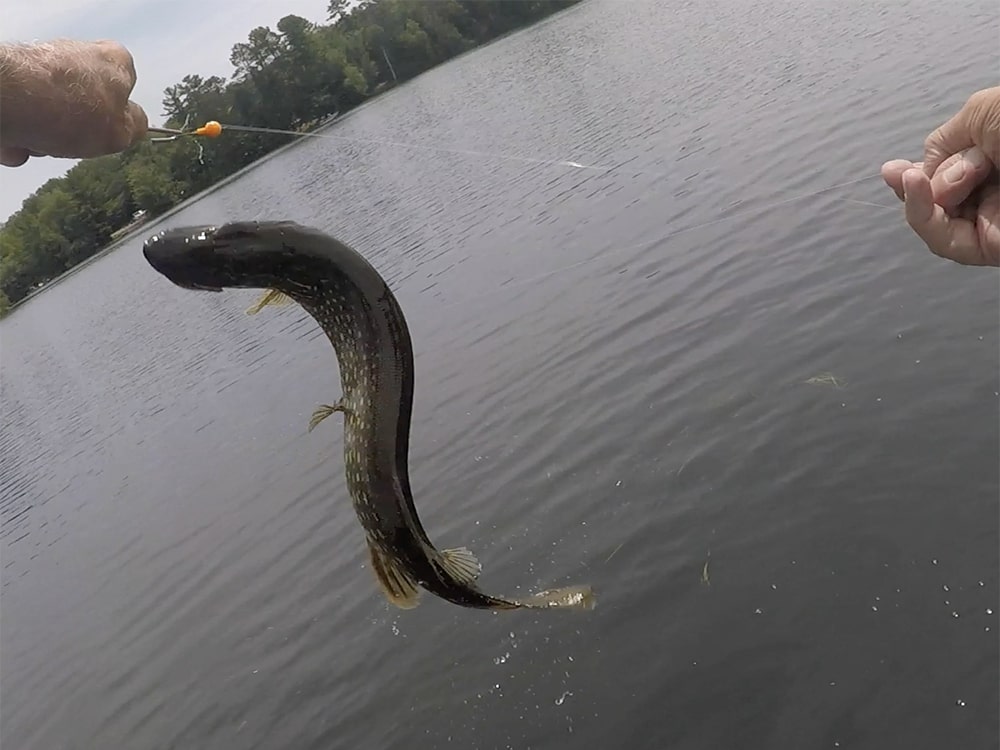
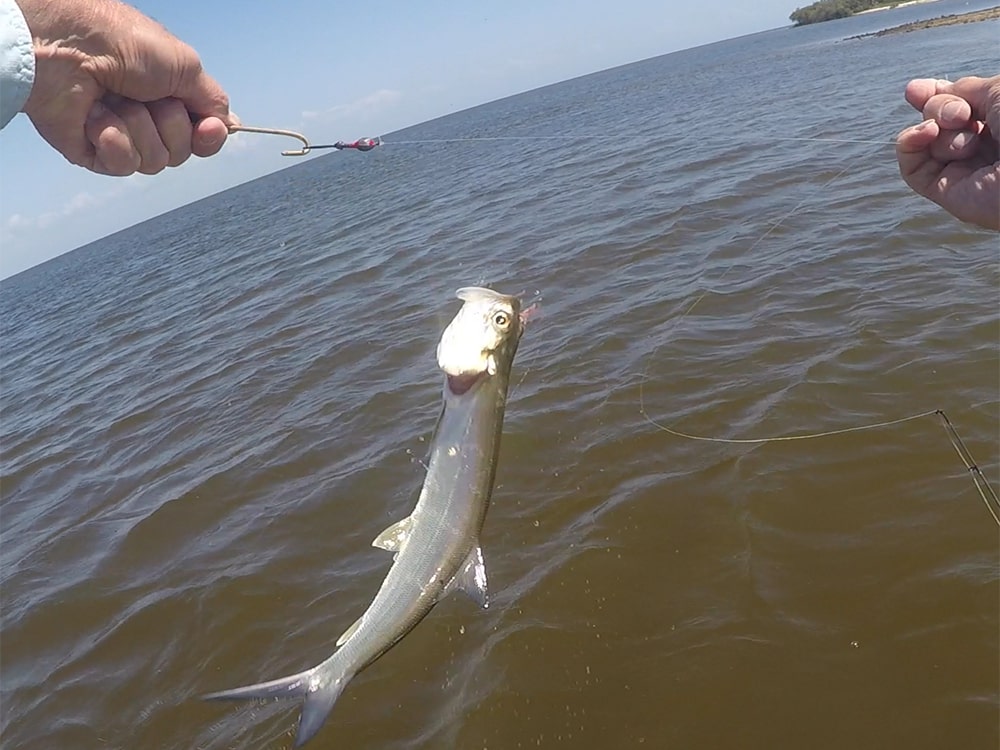
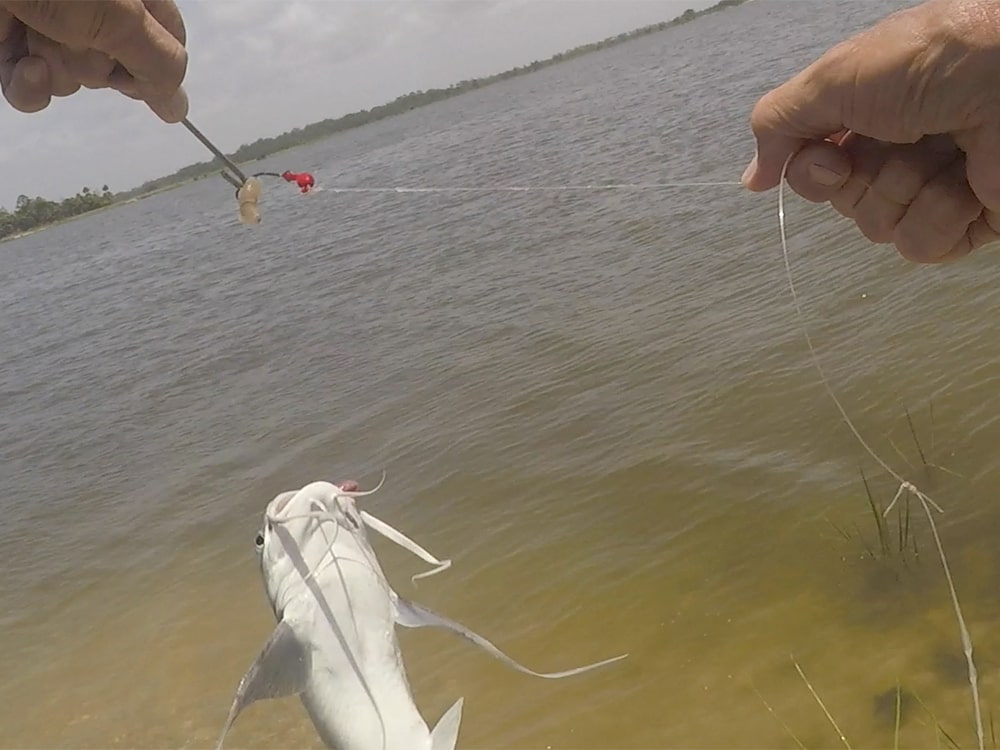
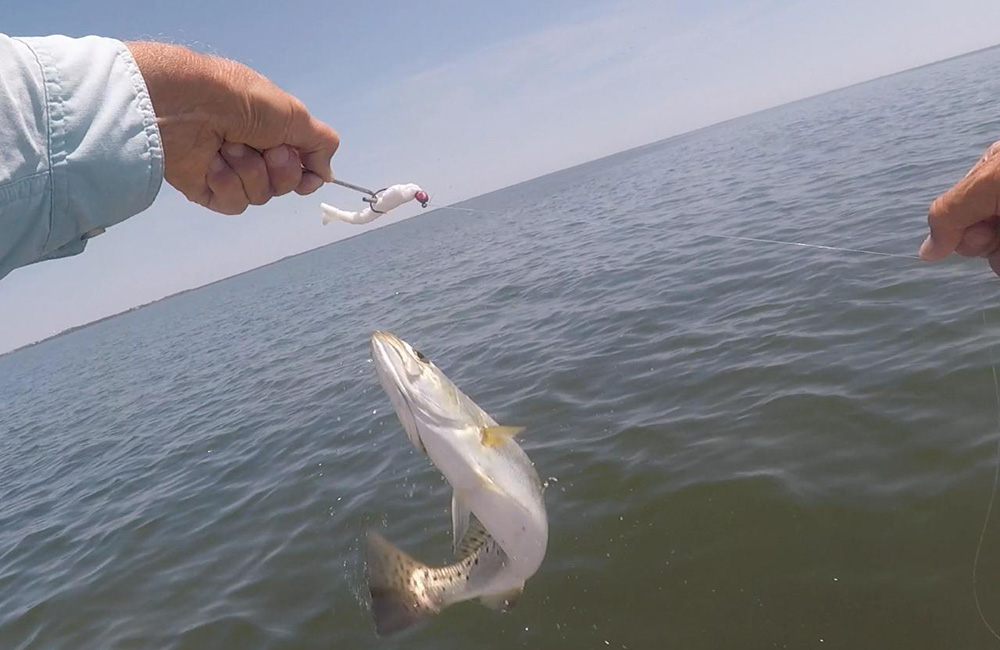
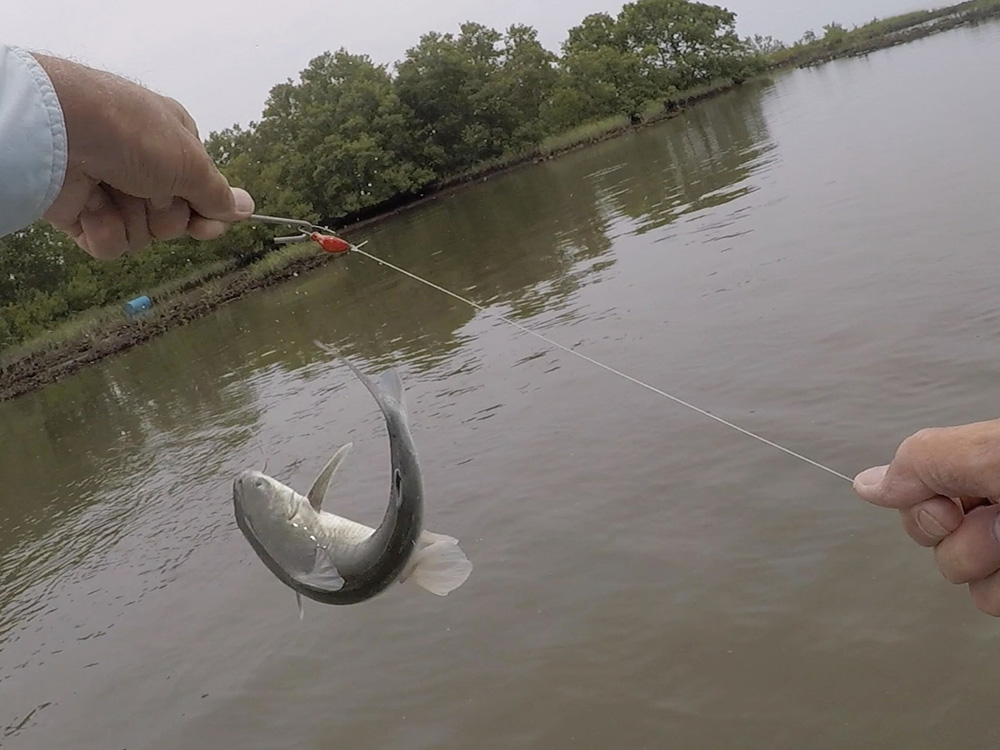
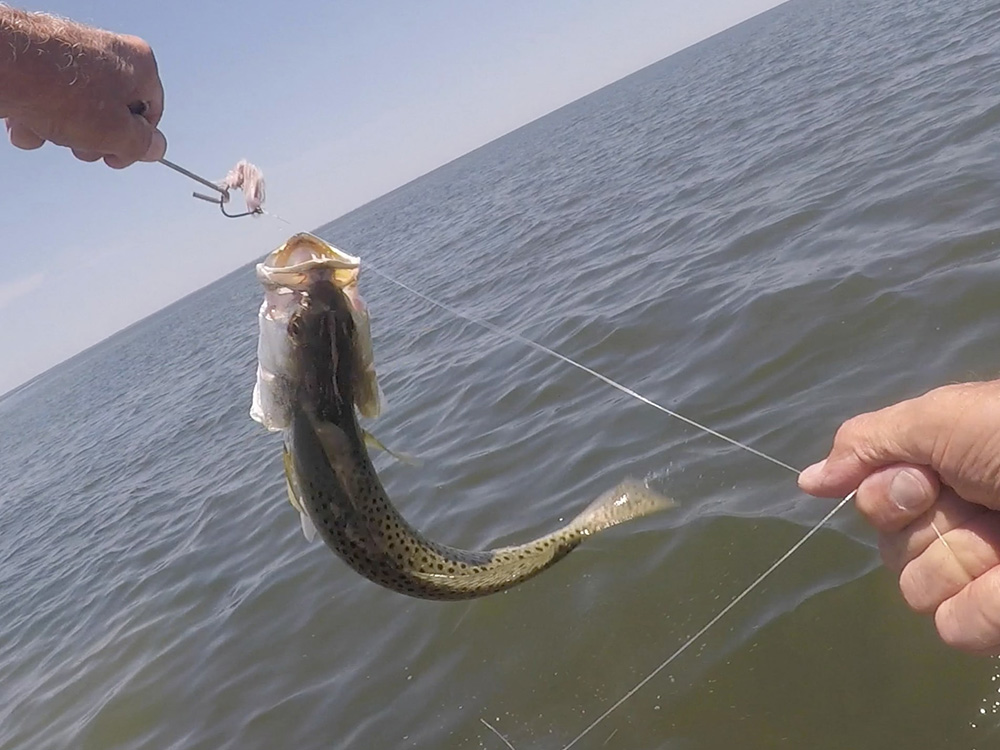
The Hookout release technique has been developed as a way for fish to be released without any handling at all. It was developed initially as a way to release landed stream trout caught on flies – without needing to hold them to remove the hook. In this situation the trout is held up by the leader, the fly’s hook is engaged by the Hookout’s crook, the line is pulled tight, and the trout shaken off back into the water. The method pulls back from the bend of the hook, thereby causing minimal harm to the fish. It’s great for fly fishermen but also works very well in many other settings.

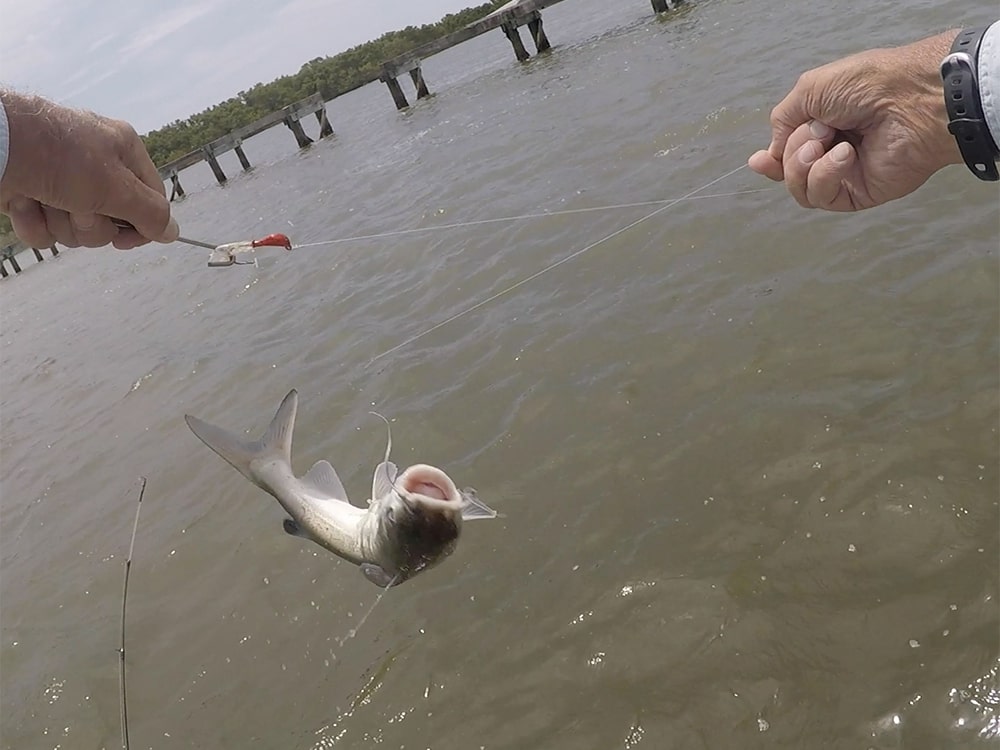
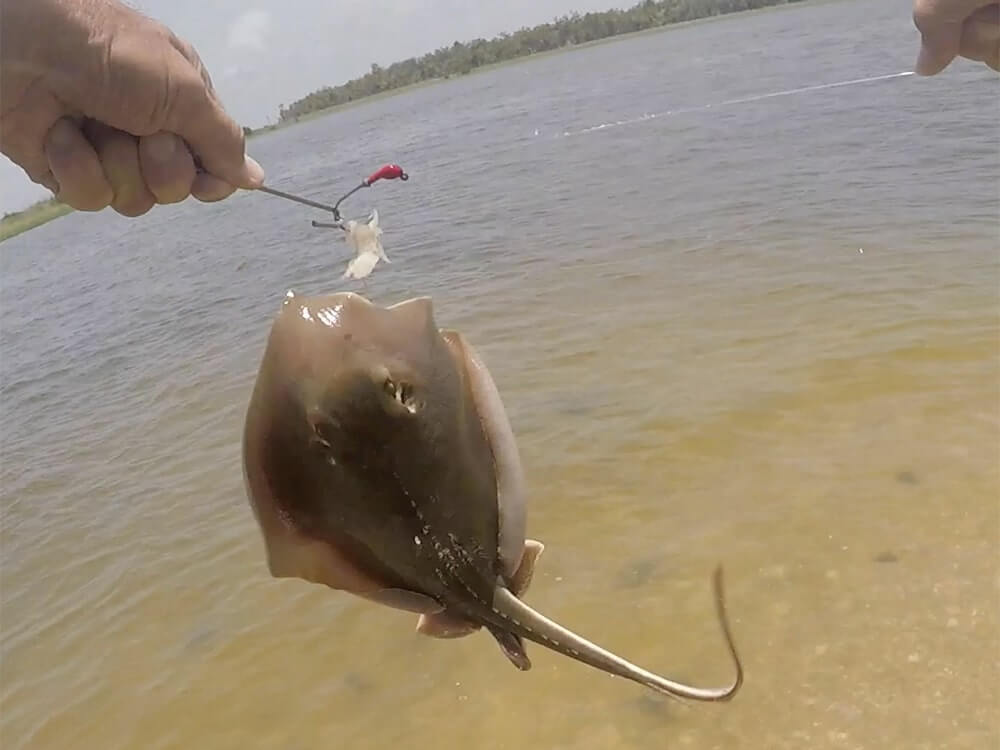
The example described above about handling saltwater catfish to remove the hook is a good example. Instead of risking a painful catfish spine injury or messy slime on one’s hand, the Hookout can remove these fish without any touching at all. There are other methods and devices that can be used for this purpose, but they are generally much larger and more complicated. The Hookout can be kept in one’s pocket or on a nearby boat surface for convenience. It can also be kept on a fisherman’s tool tether for ready use. The small size and simplicity of this device means that the cost of manufacture is much less than that of more complicated devices. This reduced cost and retail price may mean that an angler can have several Hookouts available as needed.

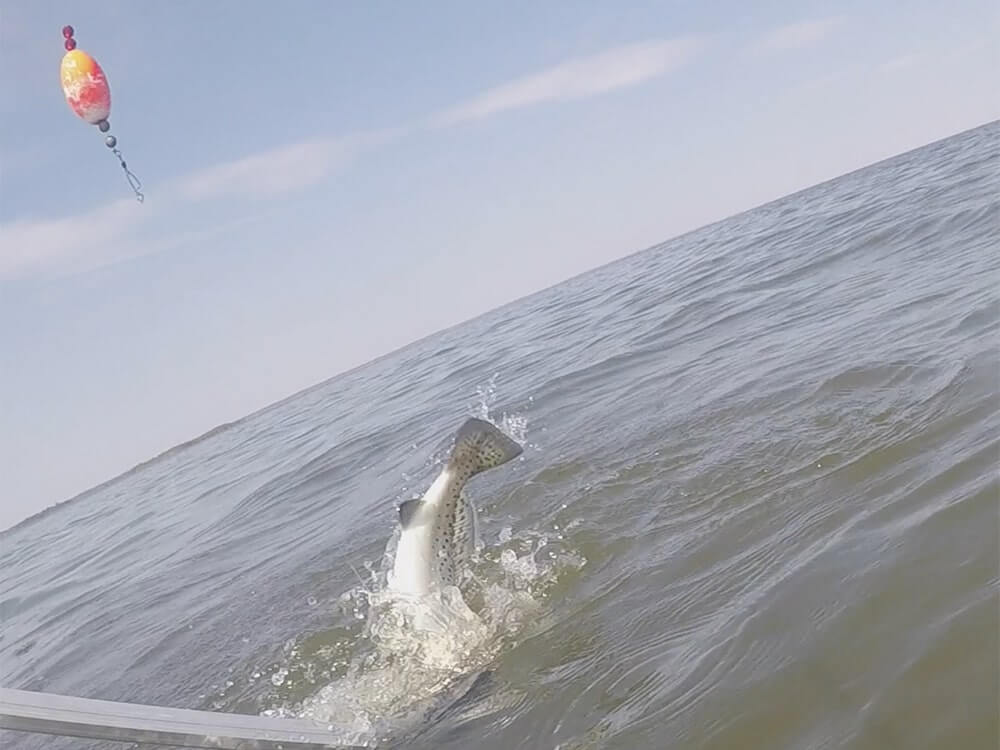
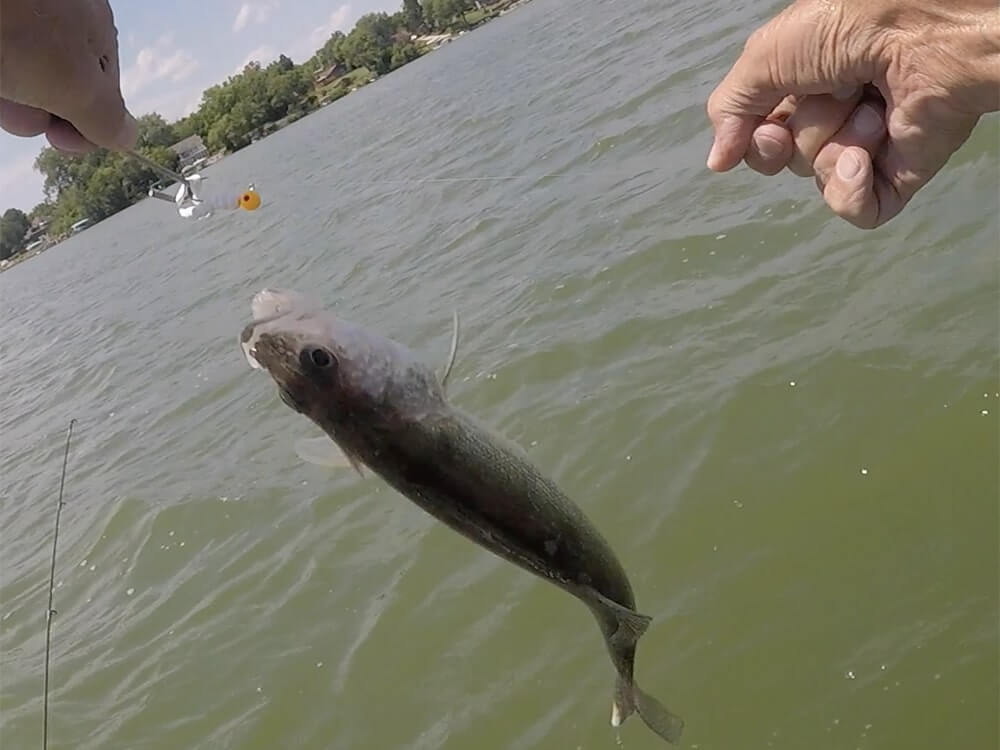
The Hookout method should be useful for protecting fish stocks of particularly desirable fish such as stream trout, walleyes, and southern spotted seatrout. Regarding the latter, trout under state size limits frequently make up most of a day’s catch. They are generally released by being held in one hand while the hook is removed by the other. How many survive after this handling process is questionable, but the Hookout non-contact release method would seem to be preferable.

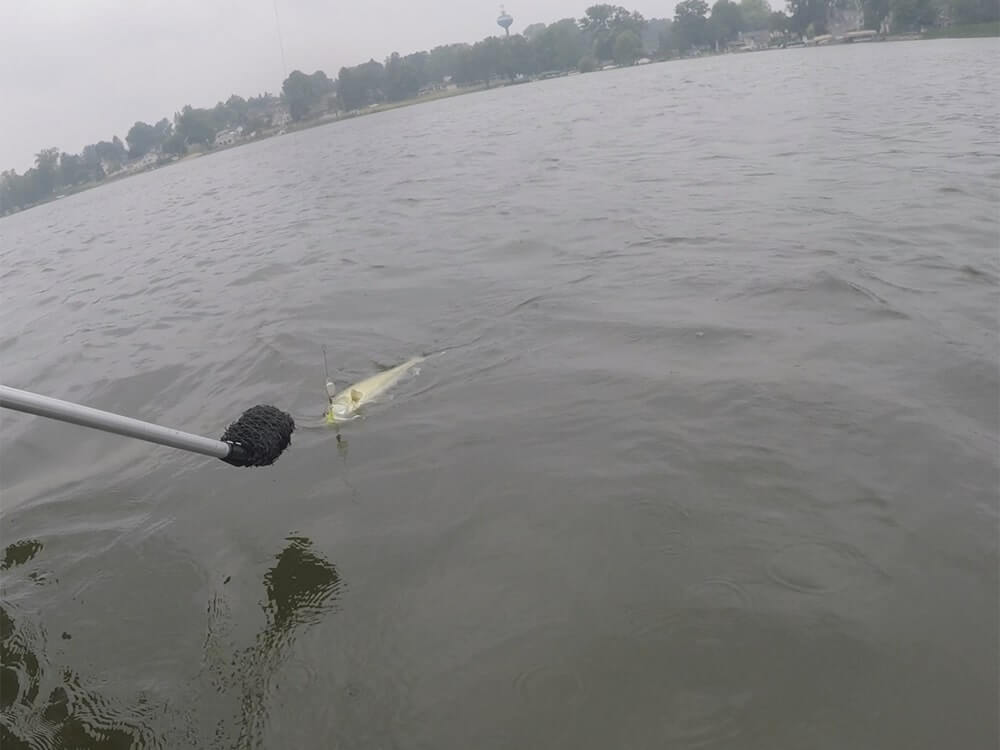
Bring the fish in close.

Release the hook with the Catch and Release Stick.

Watch the relieved fish swim off.

Hold the fish up with the line.

Catch up the hook with the Hookout, holding line tight.

Shake the fish off, back into the water

Catch and Release Stick Our Videos

Catch and Release - A New Method

Using the FishGoFree Catch and Release Stick

Using the FishGoFree Hookout

FishGoFree Tips

Catch and Release Stick

01

Remember that this device is useful only for fish caught on treble hooks (preferably a single treble hook).

02

Keep the Stick somewhere in your boat for ready access when a fish is hooked.

03

When a fish is being played and can be seen, decide quickly if it is a candidate for release by this method - is it one you want to release without photos or good measurements? Is the treble cluster visible and accessible to the device?

04

Bring the fish to within about 3-4 feet and push the Stick netting up against the treble to catch up an unembedded hook.

05

Once the treble is ensnared the fish may shake itself free; if not, give a quick shake or two to release the fish.

06

This process should work most of the time but if not, the fish can be lifted in so the hooks can be removed by usual methods (with the Stick functioning in a gaff-like fashion).

07

After a successful release, the ensnared treble can be disentangled from the Stick netting as would be done for a lure caught up in a landing net.

Hookout

01

The Hookout method works well to release most fish caught on lures or bait rigs with single hooks.

02

When the fish is brought close, prepare by holding the device in your dominant hand and the line in the other.

03

Then catch up the hook bend with the device’s crook and pull the line tight.

04

A quick shake will usually remove the hook; however, for firmly embedded hooks more jiggling and shaking may be required.

05

This method is less likely to work with big fish caught on very light line (the line may break), fish caught on very small hooks, or for fish that have swallowed the hook.

06

Safety: For big fish that might bite (Sharks) and fish caught using multiple hooks, avoid this method. And for big fish that might spook away, wear a glove on your line hand.

Genesis of

The FishGoFree Catch and Release Stick

Hypothetical: Let us envision a scenario in which you are in fact the inventor of the Catch and Release Stick. Perhaps you might have come up with the idea after an event like this:

We propose that you are a committed muskie fisherman from Appleton, Wisconsin. Your favorite water is the Eagle River chain in northern Wisconsin, just south of the border with upper Michigan. You have cabin at Catfish Lake on the chain, and you and your wife Jeanie often spend long weekends up there.

Unfortunately, Jeanie has an older brother, Malcolm, and he is coming to visit you up north. This means taking Mal muskie fishing and you are not looking forward to that. It turns out that he is a professional bass tournament fisherman from Texas and thus an expert on everything fishing. He’s never gone after muskies, but could that be much different? And he’s only got one day to fish in Wisconsin since he has a gig in Oklahoma coming up. The weather forecast doesn’t look promising for muskie fishing, and you have a bad feeling about how this is going to turn out.

He shows up Friday evening and you take him out on the chain early the next day. As you had feared, most of the day doesn't go well at all. Whatever cloud cover there had been in the morning has long since burned off leaving bright sun and bluebird skies behind. The muskies have apparently taken to lying in the weeds with their fins over their eyes. And Mal certainly isn’t impressed. Even so, he has taken to the muskie tackle very well – it being just a size upgrade from his typical bass outfits. In fact, he’s doing nicely casting the big muskie bucktails the two of you are using. But the fish are not cooperating. Not a strike or even a follow for those hours and hours of casting.

However, about 5 pm or so, when the sun has finally descended a bit, you throw a little too close to the weed edge and get hung up. But then the “weeds” give a couple of pulls back and you know you are on. From the lack of wiggle, you realize it’s a pretty good one. A muskie for sure.

Mal seems dumfounded at first. After all those fruitless hours, he’s come to believe that muskies are just a myth. Now he isn’t sure what to do. He watches as you carefully turn the fish and bring it in closer to the boat. Then he springs into action - he grabs the huge muskie net that he’s been eyeing doubtfully all day and waits for his chance. The fish is still 3 feet away when Mal makes his move. In what seems like slow motion you watch in dismay as the net’s rim sweeps past the fish’s nose, with the net bag dragging behind and tangling up the bucktail’s treble. In an instant the muskie shakes its head and is gone, leaving the lure stuck firmly in the net.

At first you are devastated. This wouldn’t have been your biggest muskie by any means, but still a good mid 40-inch fish. And the idea of Mal having to take your picture holding that muskie would have been very satisfying. Now the adrenaline is wearing off and the two of you are wondering what just happened. At least Mal is very apologetic.

After a moment’s reflection, you explain to him that it doesn’t really matter that much. You, like most muskie fishermen, release every muskie you catch anyway. A photo would have been good, but you have lots of similar ones already. And the fish got away clean. You didn’t have to dump it into the boat, untangle treble hooks from both net and fish, take the hooks out with a forceps, get the fish safely back into the water, wipe up muskie slime from the boat’s rugs, and all that.

Then you have a thought. Maybe with a muskie or other fish to be released, you should do something like that every time. A net itself, with the big rim, would be a little too cumbersome, but what if you attached a clump of netting to a stick, and then…..?

The Catch and Release Stick is born.

The FishGoFree Hookout

Hypothetical: Let’s say you are also the inventor of the Hookout. It might have developed after an event like this:

You are not only a dedicated muskie fisherman, but before you got into that you were a longstanding stream trout fisherman. In the early days you would often make your way to southwestern Wisconsin to fly fish for the nice browns there. But early on you sought a way to release the trout you landed without needing to handle the soft and obviously delicate fish. You initially fashioned a piece of coat hanger wire into a shape with a larger round loop at one end and a small, curved hook or crook at the other. You would catch up the fly’s hook with the device’s crook, pull the line tight, and shake the fish off without touching it.

Good idea, but you didn’t do much with it after giving up stream trout in favor of muskies. However, more recently you saw an article comparing fly fishing for carp to that for bonefish. You had never done the latter but knew from your early days messing around in eastern Wisconsin where to find shallow water carp. Seemed worth a try and after some prodding your friend Eddy agreed to participate. To be sure, he wasn’t thrilled by the idea of carp. He had done some fly fishing for bonefish in Mexico a few years ago and just didn’t see how carp could possibly compare. But the whole idea was intriguing enough that he decided to come along anyway.

The two of you set off one late December day, drove to the lake Michigan coast just outside of Sheboygan, and trudged through the snow to the Sheboygan power plant. You were both wearing waders and you had on one of your old fly fishing shirts under your coat. After clambering down the rocks to the warm water outflow you could see the expected carp tailing in the shallow flats outside the outflow channel.

You had been there before, but only to cast spoons for brown trout in the warm water. This time Eddy had brought along an 8-weight fly rod and he’d already tied on a brown wooly bugger. You both approached carefully, and Eddy started casting. However, instead of targeting 3-pound bonefish, he was now going after a 15-pound carp. And when he finally got hooked up, the result was definitely interesting.

The fish took off out into Lake Michigan, slower than a bonefish but very much stronger. Soon Eddy’s fly line was gone and the backing was disappearing rapidly. However, when it came out of the warm outflow to confront 35 degree Lake Michigan water, the fish turned back. Eddy was finally able to wrestle it in and beach it on some gravel at the water’s edge. As the fish lay gasping by shore it definitely didn’t look like a bonefish.

Eddy clearly wasn’t impressed. “God, that thing is ugly. I’m not touching it.”

Now you remembered your trout fishing device that somehow still resided in your fishing shirt pocket. It didn’t even have a name.

“Let me,” you said, while deftly catching up the fly’s hook with the device’s crook and pulling it out. Then with your boot toe you turned the carp back out towards deeper water and watched it swim off.

“What is that thing?” Eddy asked, looking at the bent coat hanger wire in your hand. “I bet you could use it for all kinds of fish.”

The Hookout had gotten a new life.
Why choose FishGoFree?

01

Our company has its entire focus on helping anglers to release fish more easily and safely. And since recreational anglers put back a majority of the fish they catch, the release process is a really important part of the overall fishing experience.
02

We are constantly looking to improve and popularize the methods fishermen use to remove hooks from fish they don’t intend to keep. Whereas there are thousands of companies making products to help fishermen catch fish, our complete focus on the process of release is relatively unique.
03

The two products described above have the extremely important characteristic that they facilitate hook removal without any need to land the fish or handle it in any way. Damage to the fish is thus reduced as is the mortality-increasing time out of the water for the returned fish.

04

At present more and more anglers seem to be targeting the same or fewer numbers of fish in our waters than in years past. Therefore, catch and release methods that promote better survival will become increasingly important in coming years.

05

Our products can also make fishing easier and safer for certain fishermen. For example, canoe and kayak anglers are now able to target larger and more aggressive fish. Hauling them into these small craft for hook removal can be difficult and/or dangerous. Easier release in the water may be beneficial in many cases.

06

We plan to continue our search for improved release methods ourselves and to encourage other anglers and tackle manufacturers to do the same.

07

Availability: Both products are available at Amazon, either through the following links or by searching by name and/or UPC: Catch and Release Stick UPC 198168207246, Link - and Hookout UPC 199284819160, Link -